10 Jun 2026
Correlating Jockey Experience Levels with Finish Positions on Various Track Surfaces in Thoroughbred Racing
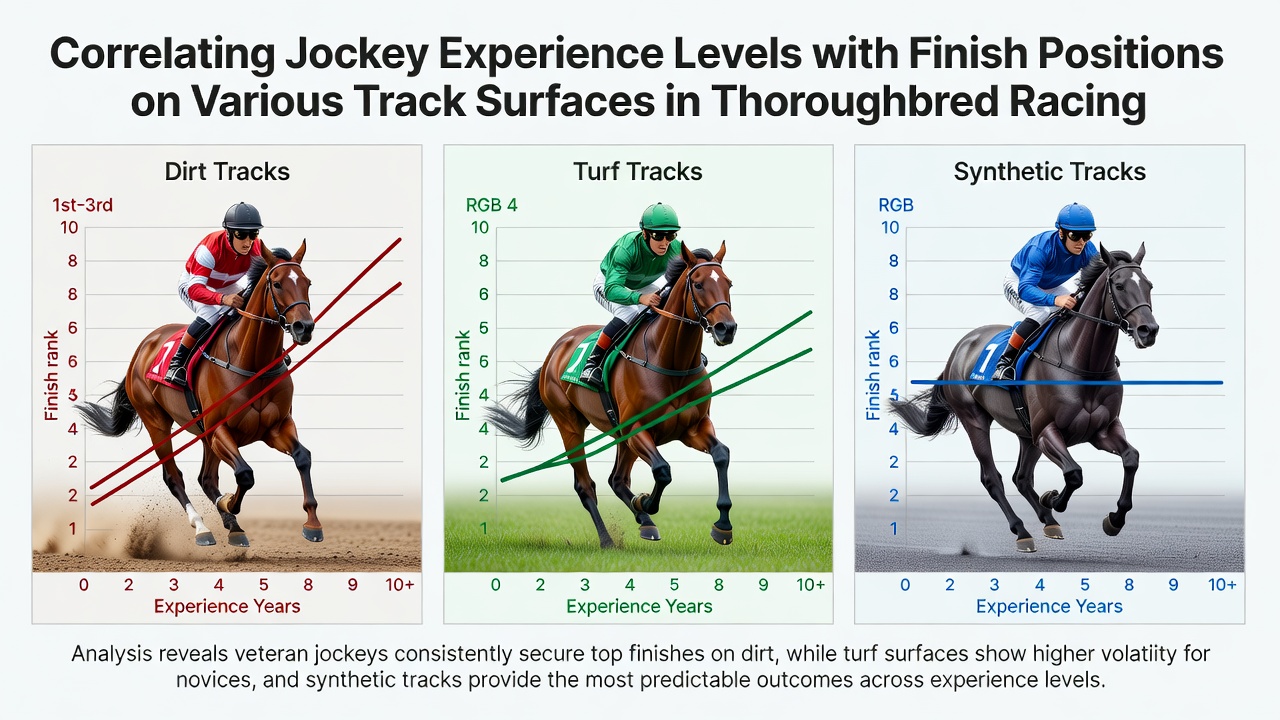
Thoroughbred racing data collected over multiple seasons shows measurable patterns between jockey experience levels and final placements, yet these connections shift depending on whether races occur on turf, dirt, or synthetic surfaces. Researchers at institutions tracking North American and European meets have compiled statistics that separate riders by years of professional mounts, win percentages, and total starts, then cross-reference those figures against surface-specific outcomes.
Defining Experience Metrics in Racing Records
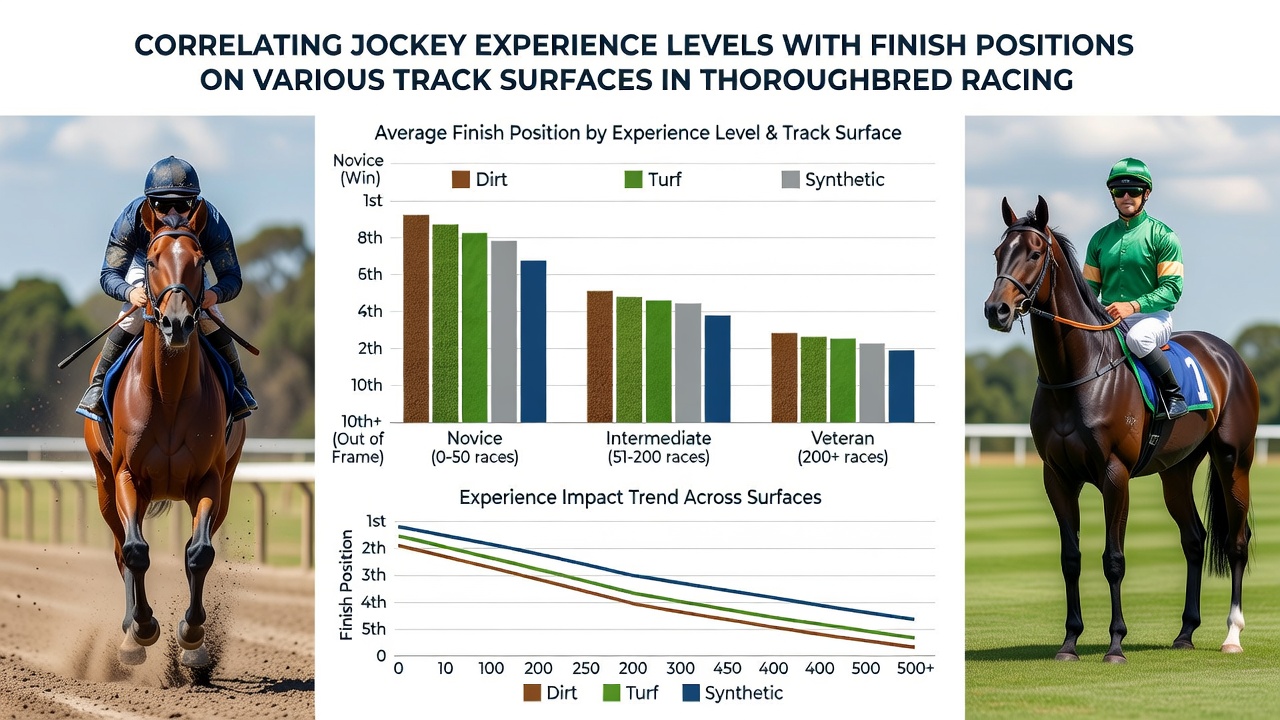
Experience gets quantified through several consistent markers such as cumulative career starts, seasonal win rates, and average earnings per mount. The Jockeys' Guild maintains databases that classify riders into tiers, with those holding more than 1,000 lifetime starts often grouped separately from apprentices or journeymen under 200 starts. Data from the 2024-2025 campaign, which carried into early June 2026 schedules, indicates that riders in the higher tier posted finish-position averages 1.8 positions better than less experienced peers when aggregated across all surfaces, though the margin narrowed or widened once surfaces were isolated.
Performance Patterns on Dirt Surfaces
Dirt tracks, common throughout the United States and parts of Canada, reward riders who manage early positioning and respond quickly to track bias changes. Studies compiled by the American Horse Council reveal that jockeys with five or more years of dirt-only experience achieved top-three finishes in 34 percent of starts during 2025, compared with 27 percent for those with fewer than two years on the surface. The gap appeared most pronounced in sprints under six furlongs, where veteran riders recorded an average placing of 4.2 versus 5.7 for newer riders. Observers note that dirt's variable kickback and changing moisture levels reward prior exposure, allowing experienced jockeys to adjust whip timing and rein pressure more effectively.
Turf and Grass Track Correlations
European and Australian records, maintained through bodies such as Racing Australia, demonstrate a different distribution. On turf, experience translated into steadier mid-race positioning rather than dramatic early advantages. Jockeys logging at least 300 turf starts over three seasons finished an average of 0.9 positions higher than less seasoned counterparts in 2025 meetings. The advantage grew slightly on undulating courses, where riders familiar with elevation changes posted top-four rates 6 percentage points above the group average. Researchers attribute part of this edge to better judgment of pace fractions when grass footing changes with weather patterns.
Synthetic and All-Weather Findings
Synthetic surfaces, installed at venues including those in the United Kingdom, Japan, and select North American tracks, produce the smallest experience-related gaps according to aggregated meet reports. Riders with under 150 synthetic starts still reached the top three 29 percent of the time in 2025, trailing veterans by only 4 percentage points. The consistent cushioning and drainage characteristics reduce some of the variables that reward long-term surface familiarity. Data collected through mid-2026 continues to show synthetic races clustering finish positions more tightly across experience brackets, with standard deviations in placing roughly 15 percent lower than those recorded on dirt.
Regional Variations and Data Sources
Geographic differences emerge when comparing North American dirt circuits against European turf programs. Canadian regulators tracking Woodbine and Hastings results through 2025 noted that local riders with extensive synthetic-to-dirt transitions maintained higher consistency than imported jockeys, even when the latter held greater overall starts. In contrast, Irish and French records highlight turf specialists who rarely switch surfaces yet post elite placement rates within their preferred category. Cross-border analyses conducted by university-affiliated equine programs suggest that surface-specific mileage, rather than raw career totals, drives the strongest correlations with final positions.
Statistical Controls and Limitations
Analyses routinely control for horse class, trainer statistics, and distance because these factors interact with rider experience. When researchers isolate jockey variables, the surface effect remains detectable but modest. For instance, a 2025 report covering 18,000 dirt races found experience accounted for approximately 8 percent of placement variance after horse ability was removed. On turf the figure rose to 11 percent, while synthetic surfaces showed just 4 percent. These percentages indicate measurable yet far from deterministic relationships. June 2026 racing calendars continue to supply fresh datasets that will allow further refinement of these models.
Conclusion
Records from multiple racing jurisdictions establish that jockey experience correlates with improved average finish positions, yet the strength of that link varies by surface type. Dirt and turf show clearer separation between experience tiers, while synthetic tracks compress differences. Continued collection of start-by-start data through 2026 and beyond will permit more precise quantification of how surface familiarity interacts with rider tenure.