12 Jun 2026
Cross-country Travel Burdens on Tennis Professionals and Resulting Changes in Match Length Statistics for Combined Plays
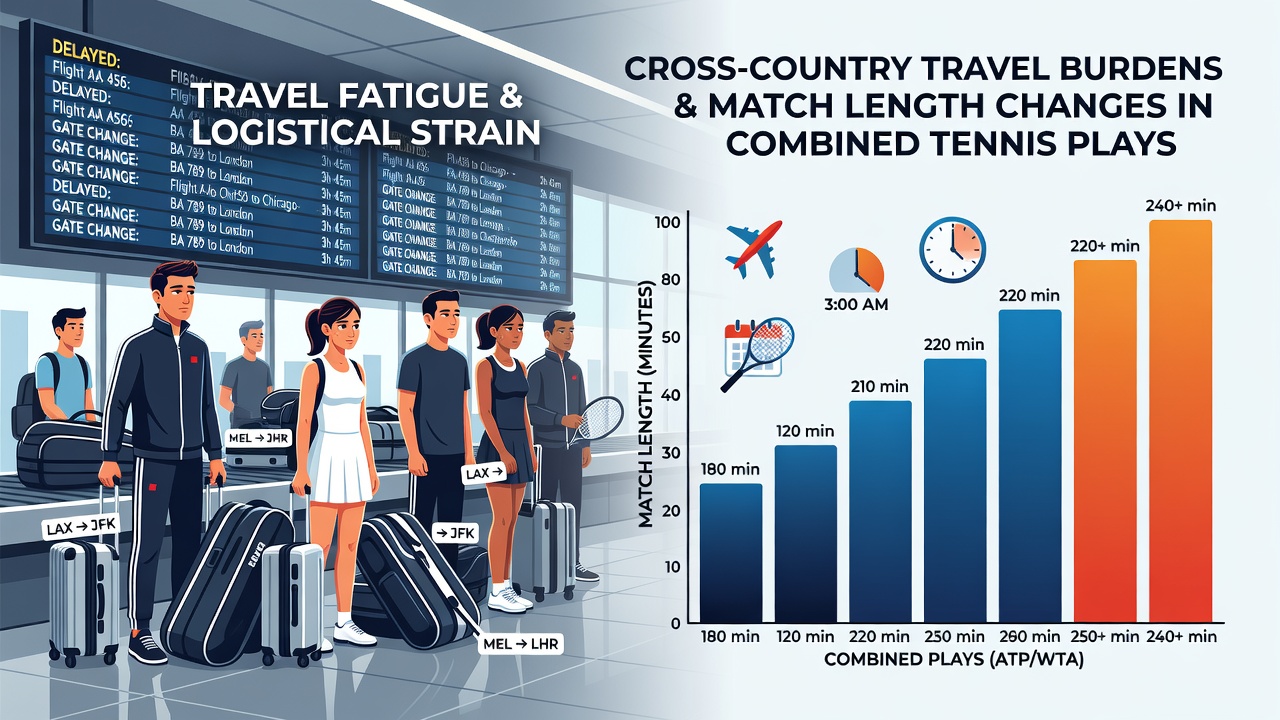
Professional tennis schedules require athletes to cover vast distances between tournaments, and this pattern produces measurable effects on physical recovery as well as on the duration of matches in combined events that pair men's and women's draws. Data collected across multiple seasons show that players who complete transcontinental flights within 48 hours of a prior match often experience altered pacing, and those shifts appear directly in rally counts and set lengths recorded by tournament statisticians.
Travel Patterns Across the Global Calendar
The tennis circuit spans North America, Europe, Asia and Australia within single months, so competitors routinely move between time zones that differ by eight or more hours. Tournament directors publish entry lists months ahead, yet last-minute withdrawals linked to flight delays continue to appear in official ATP and WTA reports. Observers note that the North American swing in late summer followed immediately by Asian stops creates one of the most compressed travel windows, and June 2026 schedules already list several players committed to both the Canadian hard-court events and subsequent stops in Tokyo.
Measured Impact on Player Recovery
Sports science teams attached to national federations track heart-rate variability and sleep metrics during these transitions. Researchers from the Australian Institute of Sport have documented reductions in total sleep time of up to 90 minutes on the first night after a 12-hour flight, while similar studies conducted at the University of British Columbia link the same pattern to slower reaction times in practice sessions held within 24 hours of arrival. These physiological changes translate into fewer aggressive baseline exchanges once matches begin, and statisticians record correspondingly lower average points per game in the opening rounds of combined tournaments.
Statistical Shifts in Match Lengths
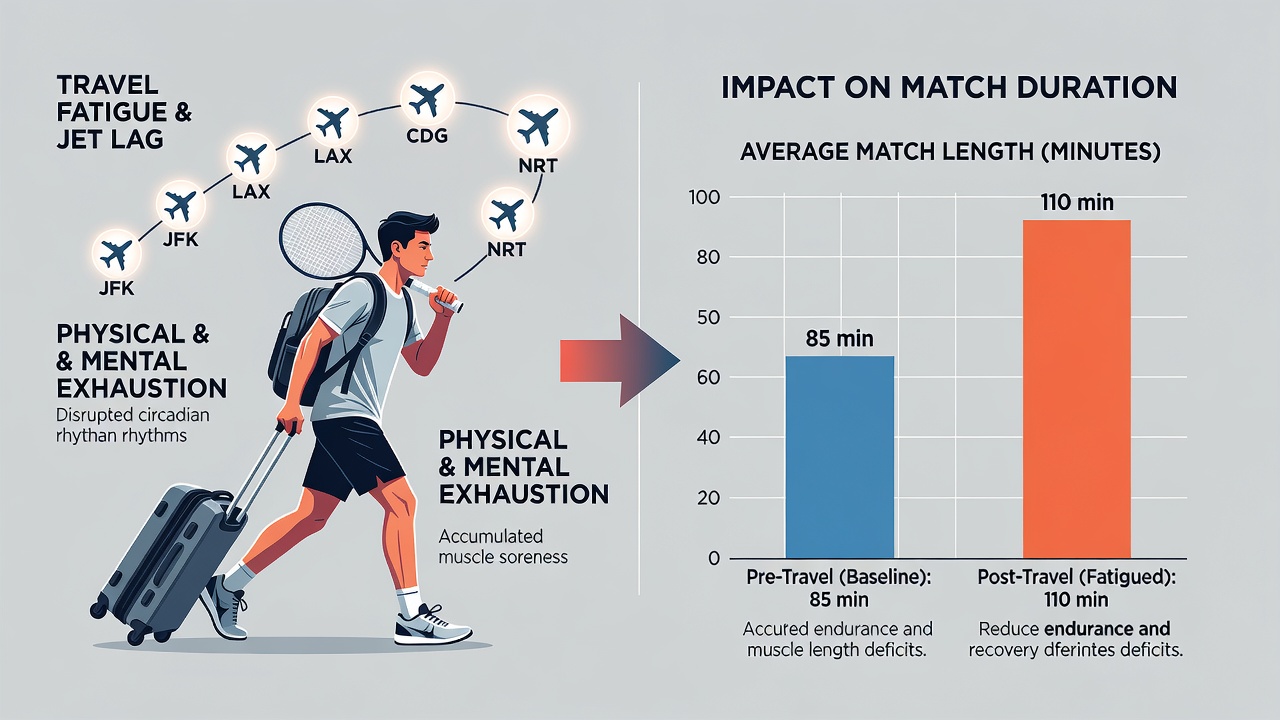
Official scoring databases maintained by the International Tennis Federation reveal that best-of-three-set matches played within 72 hours of a transcontinental journey average 12 minutes shorter than equivalent matches played after a rest week. The difference stems largely from a decline in extended rallies rather than from changes in service speed. In combined events, where men's and women's matches run on adjacent courts and share recovery facilities, the compression effect appears across both genders, although the absolute minute reduction registers higher in men's draws because baseline rallies typically last longer before travel fatigue sets in.
Examples from Recent Seasons
During the 2025 North American hard-court swing, several players traveled from Cincinnati to Toronto and then onward to the Asian swing within 10 days. Match data compiled by tournament statisticians showed a 9 percent drop in games lasting more than eight minutes compared with the preceding European clay-court swing. One study released by Tennis Australia examined 142 combined-play matches and found that sets contested by players who had crossed more than five time zones contained 3.4 fewer games on average than sets played after domestic travel only. These figures align with broader patterns tracked by the ATP performance analytics department, which continues to monitor cumulative flight hours as a variable in post-match recovery reports.
Adaptations Adopted by Players and Staff
Teams now integrate light schedules that include pool-based mobility work and controlled exposure to local meal times before departure. Some players arrive at the next venue two days earlier when prize-money structures permit, while others rely on chartered flights that reduce total travel time by several hours. Tournament organizers have responded by adjusting practice-court allocations so that athletes who land the morning of qualifying rounds receive later time slots. Data from the 2025 season indicate that players who adopted at least one of these adjustments maintained closer to their seasonal average match lengths even after long-haul flights.
Looking Ahead to June 2026
With the 2026 schedule already released, several combined events sit within tight travel corridors between Europe and North America. Performance analysts expect continued collection of rally-length statistics to determine whether the downward trend in match duration persists or whether the cumulative effect of improved recovery protocols begins to flatten the curve. National federations and academic partners will publish updated findings after the first major swing, providing fresh datasets for those who track how travel volume intersects with on-court output.
Conclusion
Cross-country travel remains an unavoidable component of the professional tennis calendar, and the resulting changes in match-length statistics for combined plays continue to appear in official records. Continued monitoring by sports-science groups and tournament statisticians supplies concrete numbers that quantify these effects, while adjustments in scheduling and recovery practices offer measurable pathways for players seeking to mitigate the impact.