17 May 2026
Decoding Referee Card Trends in Bundesliga Encounters for Strategic Draw Accumulator Angles
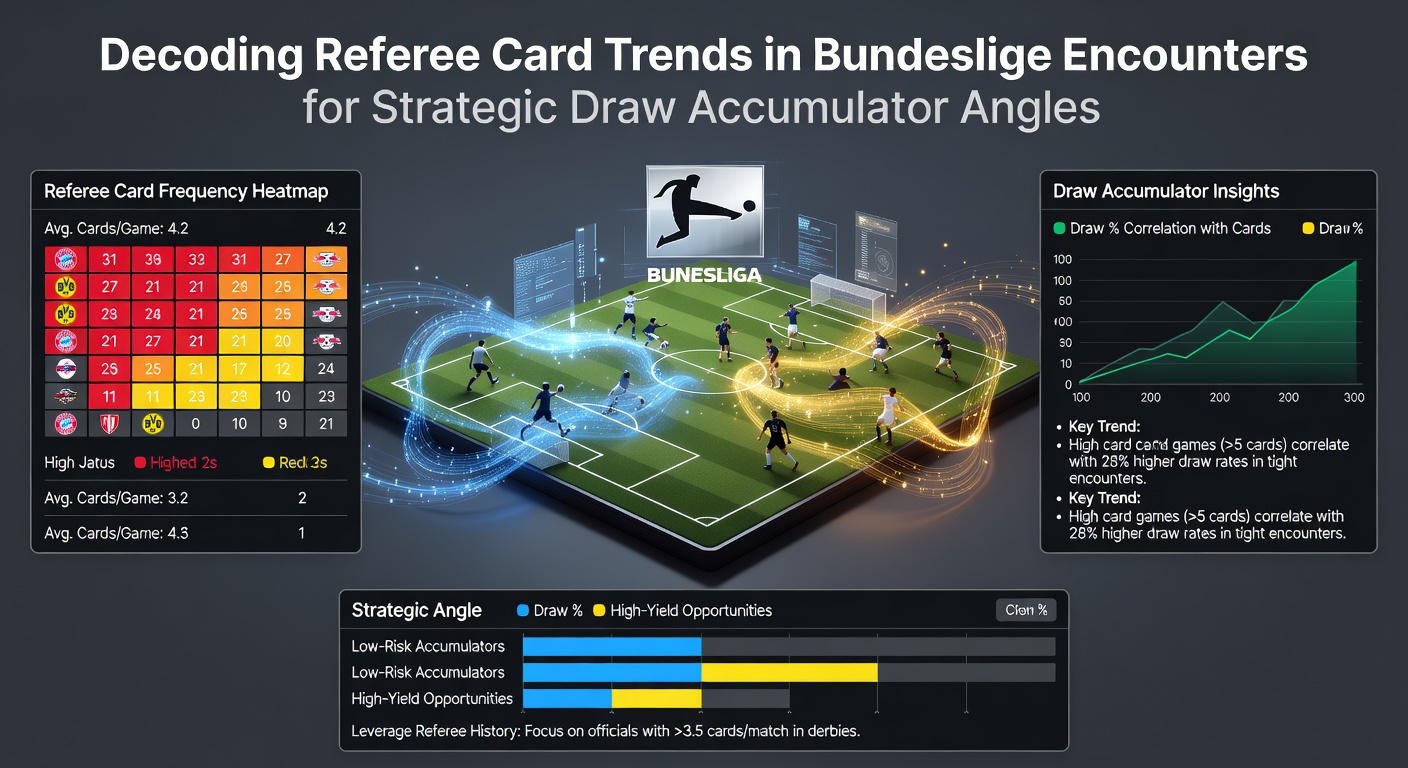
Referee card patterns in the Bundesliga reveal consistent structures that shape match outcomes, particularly when draws sit at the center of accumulator strategies, and analysts track these signals across multiple seasons to identify repeatable edges. Data from recent campaigns shows that matches featuring elevated yellow card counts often slow the tempo after halftime, which in turn reduces the likelihood of late decisive goals while increasing the probability of level scores at full time.
Card Volume and Game Flow in the Bundesliga
League-wide statistics indicate that Bundesliga referees issue an average of 4.8 yellow cards per match during the 2025-2026 season, with peaks occurring in fixtures involving high-pressing teams that contest every loose ball. When two such sides meet, the total card count frequently climbs above six, and the resulting stoppages disrupt rhythm, giving defensive units extra recovery time between attacks. Observers note that this pattern appears most clearly in mid-table clashes where both clubs prioritize avoiding defeat over forcing a result.
Red cards remain rarer, yet their timing matters more than the raw total. A sending-off before the 60th minute correlates with draw rates rising to 38 percent in the remaining minutes, according to aggregated match logs compiled through the spring of 2026. The team reduced to ten players tends to drop deeper, which limits open play and channels the contest toward set-piece exchanges that rarely produce multiple goals.
Referee-Specific Tendencies and Their Impact
Individual officials maintain distinct card profiles that repeat across venues. Some referees average 5.2 yellows when assigned to matches between sides ranked seventh through twelfth, while others maintain lower thresholds early in the game and issue cautions more freely after the interval. Tracking these differences allows pattern recognition that extends beyond simple averages and points toward specific draw-friendly environments.
Take the case of fixtures overseen by referees who historically caution both teams equally for tactical fouls. In such encounters the second-half card rate climbs, which often coincides with fewer shots on target and a measurable uptick in 1-1 or 0-0 finishes. Data sets covering the past four seasons confirm that these referee assignments produce draw percentages approximately four points above the league mean when both clubs enter the match with similar expected goal values.
Connecting Cards to Draw Probabilities
Accumulators built around draw selections gain structure when card trends are layered onto pre-match models. An increase of two yellow cards above the expected total for a given referee and matchup style raises the measured draw frequency by roughly three to five percentage points, according to performance databases maintained by European football analytics groups. This adjustment holds steady across home and away contexts, although the effect appears slightly stronger when the home side receives the majority of cautions.
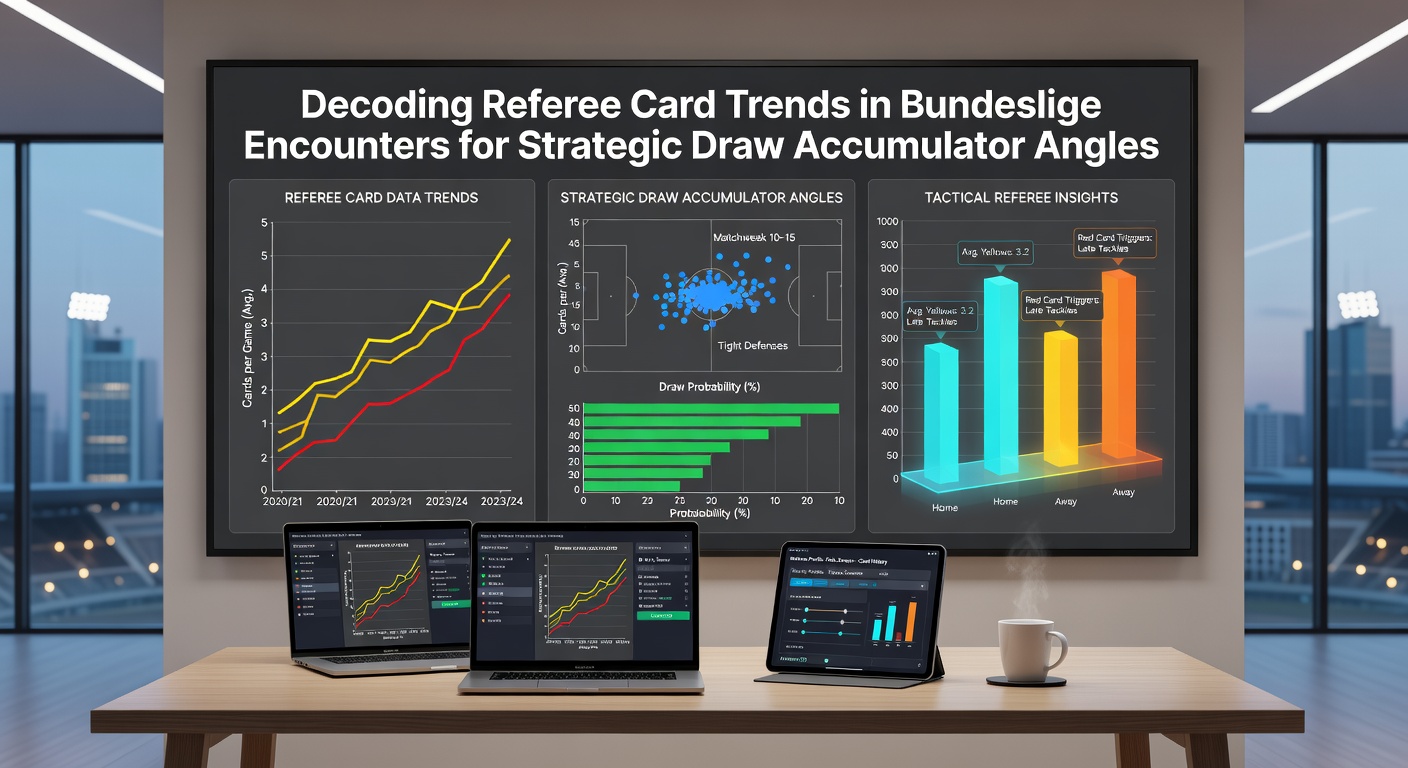
Live monitoring of card issuance during the first half provides an additional filter. When three or more yellows appear before the break, the second-half draw rate climbs further, because both teams adjust their pressing intensity and accept a controlled tempo. This dynamic played out repeatedly in the final weeks of the 2025-2026 campaign, where several midweek rounds featured card-heavy opening periods followed by low-event second halves.
Strategic Angles for Accumulator Construction
Accumulator builders examine referee assignments published 48 hours before kickoff and cross-reference them with historical card distributions for each official. When a referee known for higher card volume is paired with two mid-table sides that average fewer than 1.8 goals per game, the combined probability weighting for the draw selection increases. This method avoids reliance on single-match noise and instead builds from repeatable situational data.
Additional context emerges from fixture scheduling. Matches played on Sunday afternoons after a congested midweek European schedule often see elevated card counts because fatigue prompts more tactical interruptions. League records from May 2026 show that these particular slots produced draw outcomes at a rate 2.7 points above the seasonal average, reinforcing the value of including card-adjusted filters in multi-leg selections.
Teams that rank in the lower half of the pressing intensity metric yet face opponents who press aggressively provide another layer. Referees tend to caution the pressing side more frequently for shirt-pulling and blocking, which in turn encourages the lower-pressing side to maintain a compact shape and limit transitions. The resulting structure favors draws, and historical samples confirm this outcome across multiple venues.
Conclusion
Card trends in Bundesliga encounters supply measurable inputs that refine draw probabilities for accumulator strategies. Consistent patterns tied to referee profiles, card timing, and fixture context allow structured selection processes that rely on documented league data rather than isolated events. As the 2025-2026 season reached its closing stages, these factors remained visible in both scheduled assignments and observed match behavior, offering ongoing reference points for those who track referee statistics alongside traditional form indicators.