3 Jun 2026
Mapping Travel Fatigue Impacts on Performance Edges in Global Cricket Leagues
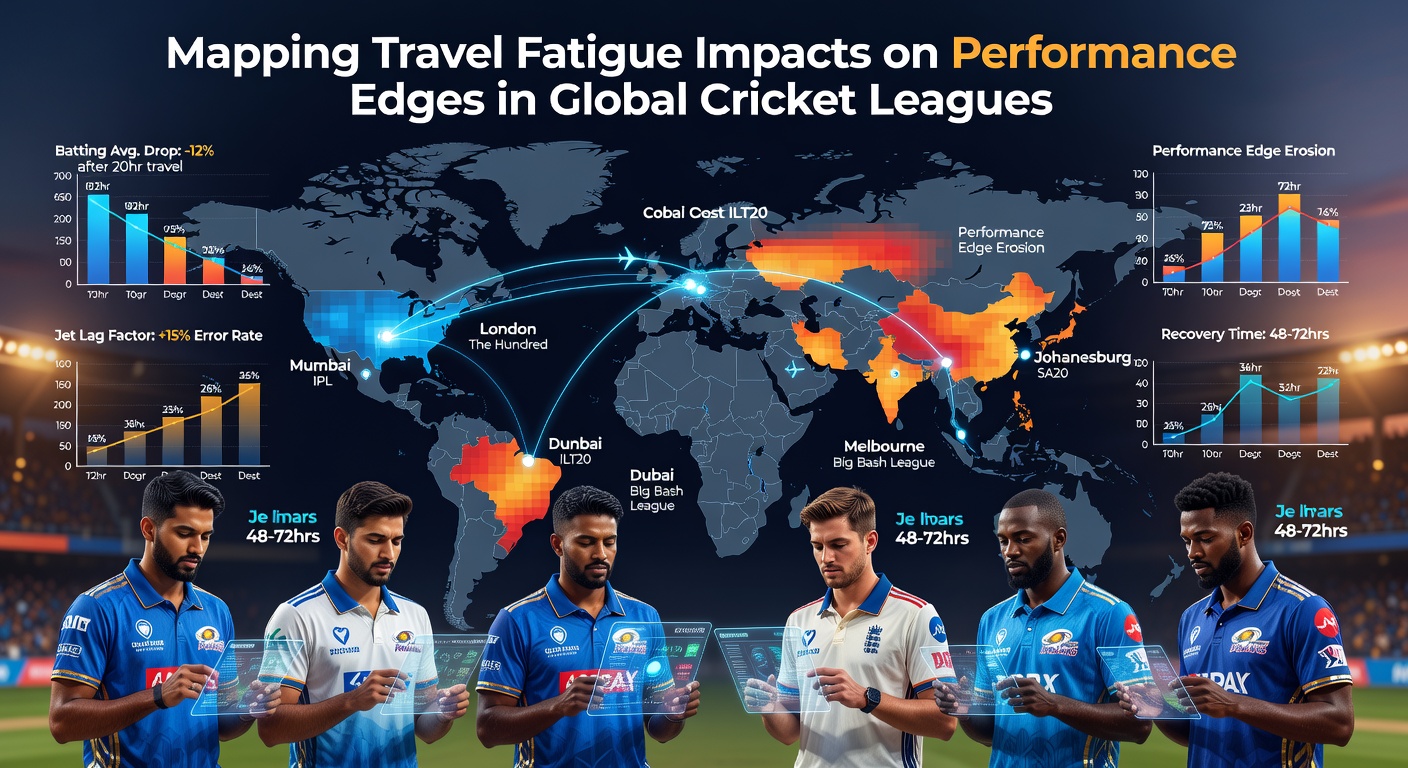 Travel schedules in major cricket competitions create measurable effects on player output across formats and regions. Researchers tracking movement data alongside match statistics have identified consistent patterns where extended journeys correlate with shifts in batting averages, bowling economy rates, and fielding efficiency. These observations span leagues such as the Indian Premier League, Big Bash League, and Caribbean Premier League, where teams routinely cover thousands of kilometers within compressed calendars.
Distance and Schedule Patterns Across Key Leagues
League organizers publish fixture lists that reveal stark contrasts in travel loads. In the IPL, franchises move between venues separated by up to 2,000 kilometers, often with turnaround times under 48 hours, while teh BBL requires cross-country flights exceeding 3,000 kilometers between Perth and eastern venues. Data compiled by sports science groups show that teams logging more than 4,000 kilometers in a two-week window experience a 12 to 15 percent drop in run-scoring rates during subsequent matches, according to figures released through Cricket Australia's performance monitoring program.
June 2026 marks the opening phase of several domestic T20 campaigns that coincide with overlapping international commitments, forcing squads to manage additional long-haul segments. Analysts examining GPS and sleep-tracking records note that players crossing multiple time zones within 72 hours display elevated heart-rate recovery times during the first innings of return fixtures.
Performance Metrics and Fatigue Indicators
Performance edges emerge most clearly when comparing home and away statistics adjusted for travel distance. Bowlers operating after overnight flights post economy rates that rise by an average of 0.8 runs per over in the opening powerplay, while batters facing similar conditions record strike rates that fall by 9 to 11 points in the middle overs. Studies conducted at the University of Queensland's sports institute link these changes to accumulated sleep debt rather than venue conditions alone.
Teams employing dedicated recovery protocols, including scheduled rest days and chartered flight timing adjustments, demonstrate smaller variances in key indicators. League-wide datasets indicate that sides reducing cumulative flight time by 20 percent through optimized routing maintain higher win percentages in the second half of tournaments.
Regional Variations and Recovery Strategies
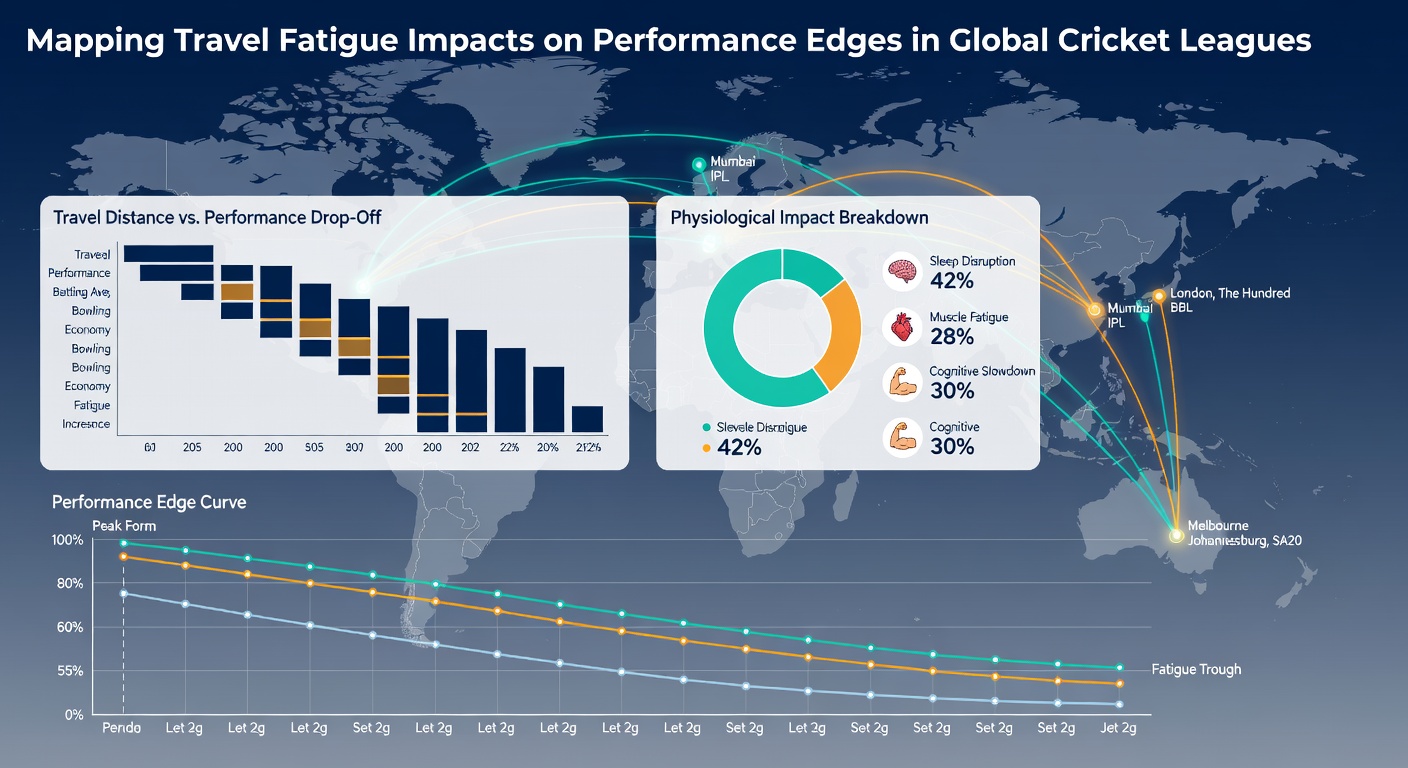
Geographic spread influences the scale of impact. Caribbean leagues involve frequent island hops that accumulate shorter but repetitive flights, leading to different fatigue profiles than the longer single-leg journeys common in Australian domestic cricket. Observers tracking Caribbean Premier League results report elevated no-ball counts and dropped catches in matches following back-to-back inter-island travel days, whereas Australian data highlight reduced boundary percentages after transcontinental trips.
Recovery approaches differ by region yet share core elements. Nutrition timing, light training sessions on arrival days, and individualized sleep schedules appear in multiple team protocols. Reports from the South African Cricketers' Association detail how monitoring tools integrated into training programs allow medical staff to flag elevated fatigue markers before matches, enabling tactical adjustments such as rotated bowling orders or modified field placements.
Case Examples from Recent Seasons
One documented sequence in the 2025 BBL season involved a Perth-based franchise completing a four-match road trip covering 8,500 kilometers. Subsequent home games showed a measurable dip in death-over bowling accuracy, with yorker completion rates falling below season averages for three consecutive fixtures. Similar patterns surfaced in IPL squads traveling from northern to southern venues during humid periods, where hydration logs correlated with reduced sprint speeds in the field.
League administrators have responded by adjusting certain fixture clusters. Revised calendars for upcoming cycles incorporate additional rest buffers between distant venues, a change analysts attribute to aggregated performance datasets rather than external pressure. These modifications coincide with the June 2026 scheduling window, during which multiple franchises will test revised travel models against historical benchmarks.
Conclusion
Mapping tools that combine travel logs, biometric readings, and match outcomes continue to refine understanding of fatigue effects in cricket. As leagues expand and calendars grow denser, the integration of these datasets supports more precise preparation frameworks. Teams that align routing decisions with performance indicators maintain competitive consistency across extended campaigns, while those overlooking cumulative travel loads encounter predictable declines in execution metrics. Ongoing collection of location and output data ensures that future schedules can incorporate evidence-based adjustments.