21 Jun 2026
Night Game Narratives: How Artificial Lighting Affects Horse Racing Outcomes and Betting Markets
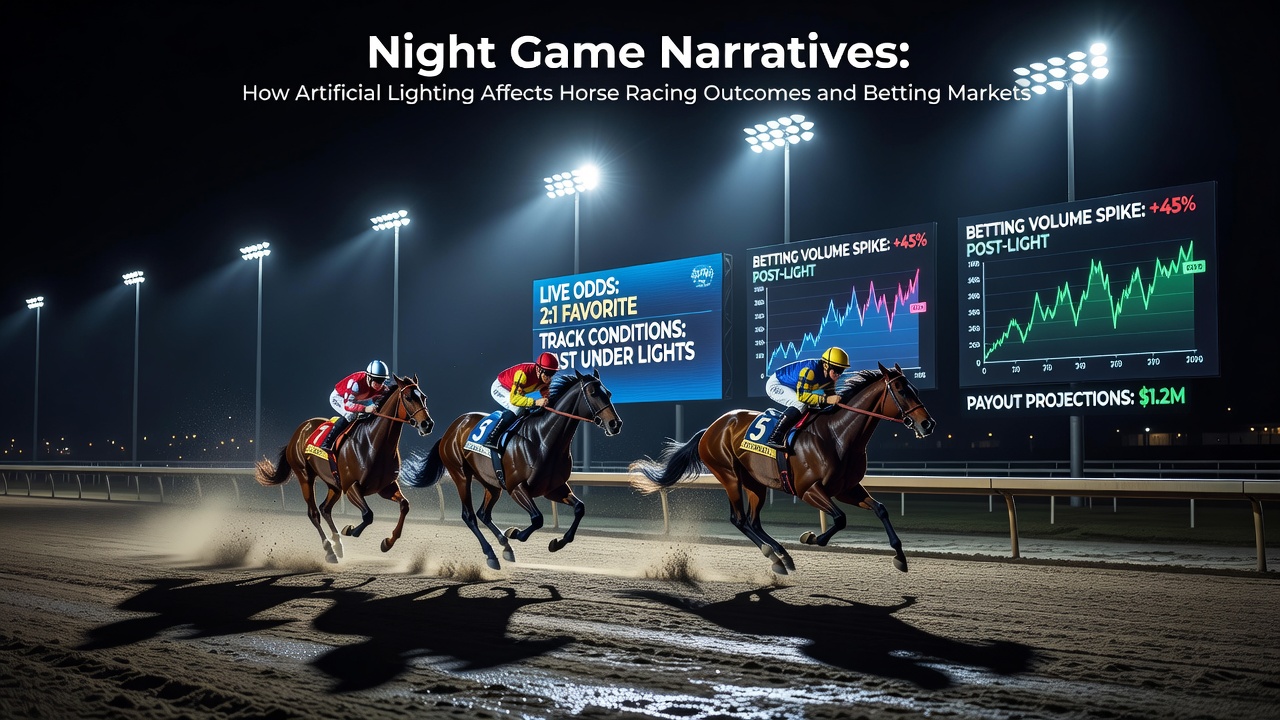 Night racing has expanded across major circuits in recent years, with tracks installing high-intensity LED arrays and floodlight systems that extend meeting times well past sunset. Observers note these setups create consistent visibility for spectators and officials, yet they also alter the environmental conditions horses and riders encounter compared with daylight events. Data from multiple jurisdictions shows measurable differences in race times, favorite win rates, and market movements once meetings shift under lights.
Lighting Systems and Equine Vision
Researchers at veterinary institutions have documented how horses perceive artificial light spectra differently from natural daylight, particularly in the blue and green wavelengths that dominate many track installations. Studies conducted at facilities in Australia and the United States indicate that certain LED configurations reduce contrast for animals moving at speed, leading to subtle adjustments in stride patterns during the final furlongs. Those adjustments rarely produce dramatic failures, but they accumulate across fields where margins measure fractions of a second.
Tracks in New South Wales and California began rolling out tunable lighting rigs around 2023 that allow operators to shift color temperature mid-meeting. Figures released by Racing NSW in early 2026 reveal that meetings using warmer spectra recorded lower rates of late-race position changes than cooler setups used the previous season. Analysts tracking sectional data attribute part of this shift to improved depth perception for trailing runners, though they caution that wind and surface moisture remain larger variables.
Performance Metrics Under Lights
Performance records compiled by The Jockey Club in the United States demonstrate that average winning times at night meetings lengthen by 0.8 to 1.4 seconds on turf surfaces compared with equivalent daytime cards at the same venues. Dirt tracks show smaller gaps, yet inside draws still post higher strike rates once floodlights activate. Handicappers who adjust speed figures for these conditions report that raw times alone distort class ratings when bettors fail to separate lighting effects from pace dynamics.
Jockey and Trainer Adaptations
Trainers with large strings often schedule specific workouts under simulated lighting to acclimate horses before night assignments. Data from the Hong Kong Jockey Club, which runs the majority of its program after dark, shows that horses with prior night experience maintain win percentages closer to their daytime marks than first-time night runners. Jockeys meanwhile describe subtle changes in balance and whip timing when shadows from rail posts move across the racing line, though these reports remain anecdotal until larger biometric studies confirm them.
Betting Market Responses
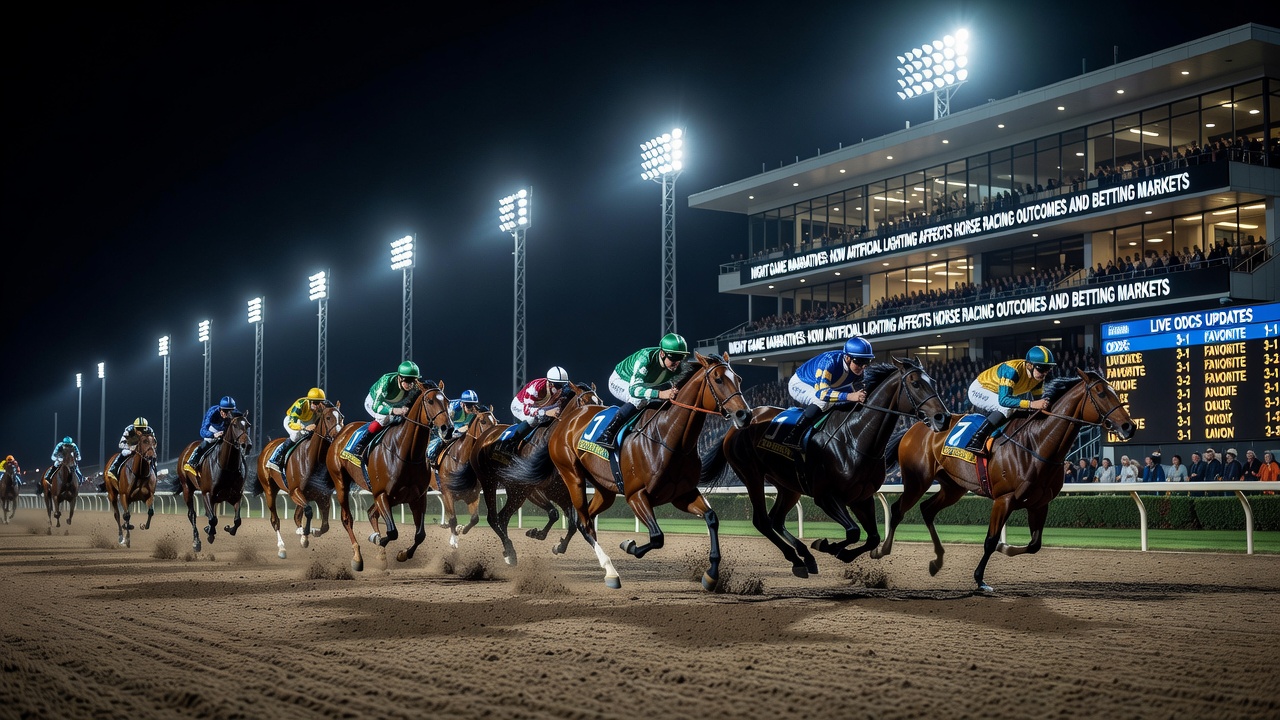
Betting exchanges and traditional pools both register distinct patterns once twilight meetings transition to full night racing. Liquidity on later races tends to concentrate on runners with proven night form, pushing morning line odds outward for untested animals even when their overall records appear competitive. Operators at several European tracks reported in 2025 that overround percentages on night cards rose modestly compared with daytime equivalents, largely because sharp players focused on a narrower set of contenders.
What's interesting is how these pricing shifts interact with live betting windows. Markets react quickly to early sectional data under lights, yet the reaction sometimes overshoots when horses that dislike the illumination drop out of contention mid-race. Operators monitoring exchange volumes during June 2026 meetings noted that in-running liabilities on favorites grew larger after the fourth race once darkness fully settled, suggesting bettors continue recalibrating expectations as the card progresses.
Environmental and Surface Interactions
Artificial lighting also changes how track surfaces retain heat and moisture after sunset. Grounds staff at several Australian venues adjust irrigation schedules on night cards to counteract faster drying rates caused by radiant heat from lamps. Soil temperature readings collected by Racing Victoria show that illuminated sections can remain two to three degrees warmer than unlit areas, affecting how kickback behaves for runners traveling wide. Those micro-differences feed directly into sectional timing models used by professional syndicates.
Regulatory bodies in multiple regions now require operators to publish lighting specifications alongside going reports. The California Horse Racing Board began mandating such disclosures in 2024, allowing handicappers to cross-reference lumen output and fixture angles against historical performance charts. Early analysis of the resulting datasets suggests that tracks with more uniform light distribution experience fewer dramatic late surges from outside runners than venues with noticeable bright spots and shadows.
Conclusion
Artificial lighting introduces measurable variables into race outcomes and market behavior without rendering previous form entirely irrelevant. Continued collection of sectional and biometric data across different lighting regimes will likely refine the adjustments already embedded in professional models. Bettors and analysts who incorporate these factors alongside traditional pace and surface considerations gain an additional layer of precision when evaluating night meetings.