24 Jun 2026
Stadium altitude quirks reshaping endurance stats and total goals in high-elevation soccer matches for multi-leg wager stacks
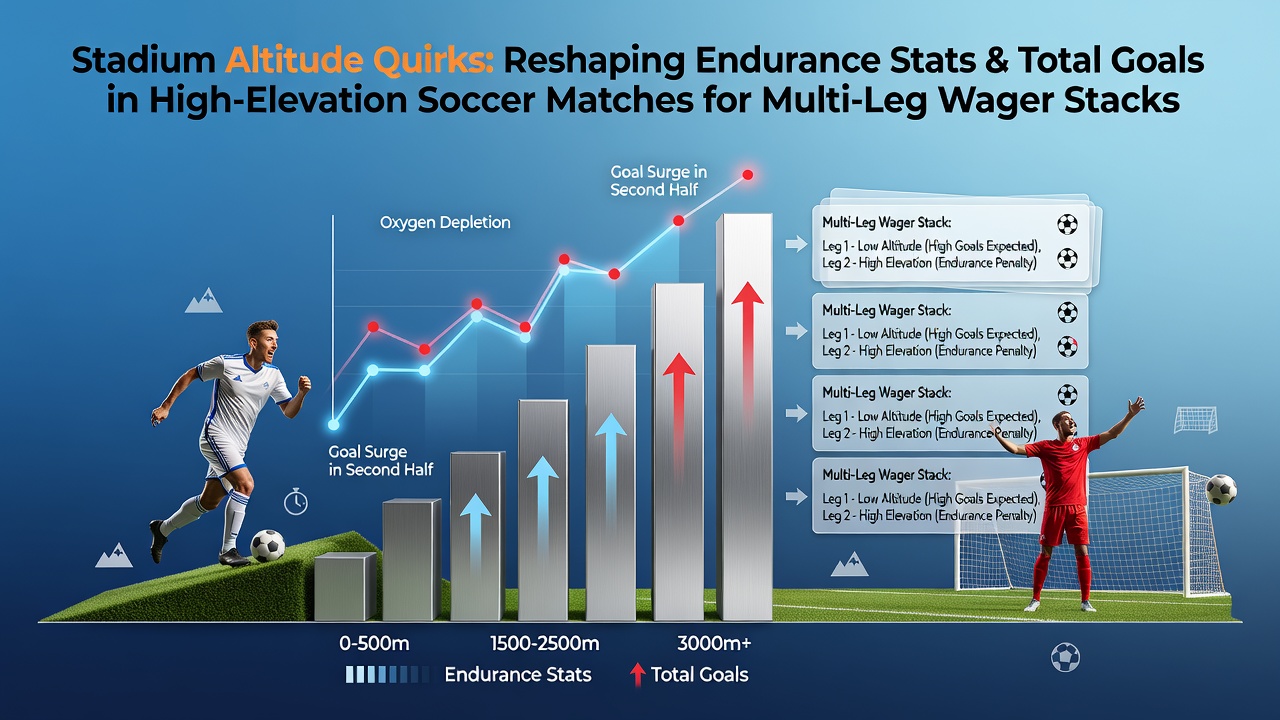
High-elevation venues continue to alter player performance metrics in measurable ways, and researchers tracking oxygen uptake alongside match data note consistent shifts in endurance markers and scoring patterns. Venues above 2,000 meters create physiological demands that visiting squads encounter immediately upon arrival, while home teams adapt through repeated exposure during training cycles.
Physiological adjustments at elevation
Studies from institutions such as the University of Calgary document reduced maximal oxygen consumption rates when athletes perform above 2,500 meters, and these reductions translate directly into shorter high-intensity running distances during the second half of matches. Data collected across South American qualifiers shows visiting players cover 8 to 12 percent less distance at speeds exceeding 20 kilometers per hour compared with sea-level baselines, whereas local squads maintain closer to their normal outputs because of chronic adaptation.
Ball trajectory changes add another variable because lower air density allows the sphere to travel farther with the same force, yet goalkeepers and defenders adjust positioning more slowly when fatigued. Match logs from Bolivia's national stadium in La Paz reveal an average of 2.3 additional long-range attempts per game, though conversion rates remain tied to the shooters' remaining aerobic capacity rather than the altitude itself.
Goal-scoring distributions across known venues
League records compiled over multiple seasons indicate that total goals per match at Mexico City's Estadio Azteca average 2.41 when both sides have at least 48 hours to acclimatize, yet that figure drops to 2.18 when one side arrives within 24 hours. Similar patterns appear in Ecuadorian first-division fixtures at Quito, where home teams secure victories in 61 percent of contests while total goals stay below the league median. Observers note that these outcomes stem from progressive fatigue rather than any deliberate tactical shift, and statisticians isolate altitude exposure as the dominant factor when controlling for squad strength and recent form.
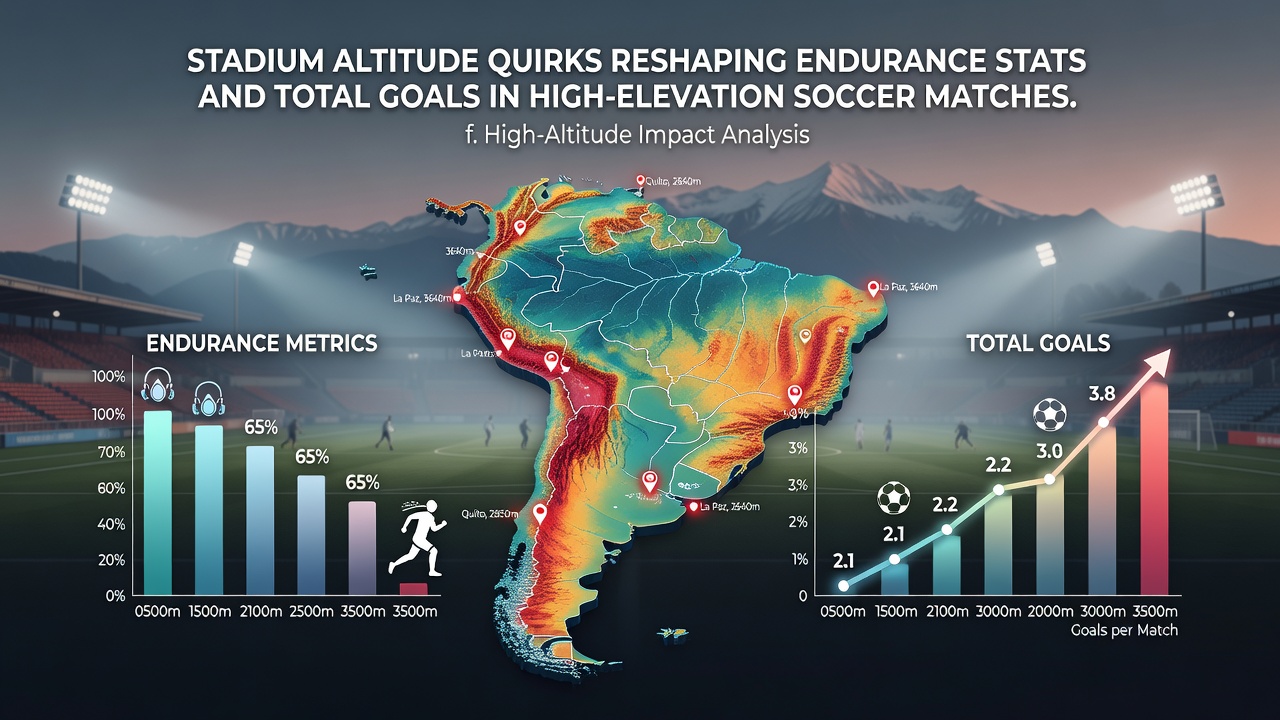
Peruvian clubs based in Cusco record even sharper second-half declines, with GPS data indicating heart-rate zones above 85 percent of maximum sustained for longer durations than at lower venues. This sustained load correlates with a measurable reduction in successful passes completed after the 70-minute mark, and analysts from CONMEBOL technical reports link the pattern to fewer transitional attacks developing in the closing stages.
Implications for multi-leg betting frameworks
Accumulator builders examining historical datasets find that under-2.5 goal selections appear more frequently in fixtures scheduled at elevation when one participant travels from sea level without extended preparation time. FIFA medical guidelines issued ahead of the 2026 World Cup cycle recommend minimum acclimatization windows for matches hosted in Mexico City, and those protocols align with observed drops in total goals across prior international tournaments staged at similar heights. European squads preparing for June 2026 qualifiers have already begun incorporating simulated altitude chambers into training blocks, and early camp reports show improved maintenance of sprint volume after seven days of controlled exposure.
Canadian and Australian research groups tracking similar environments report parallel findings in domestic competitions, confirming that endurance erosion rather than weather or pitch conditions drives the statistical deviations. These consistent patterns allow modelers to weight altitude differentials more heavily when constructing multi-leg sequences that include high-elevation legs.
Case examples from recent campaigns
One CONMEBOL qualifier between a coastal nation and Bolivia produced only 1.8 goals per game on average across four meetings, with the visiting side averaging 14 percent fewer recoveries in the final third during the second half. In contrast, matches between two highland-based clubs in the same competition yielded goal totals closer to regional norms because both sets of players shared comparable adaptation levels. Mexican league statisticians note that Cruz Azul and América encounter fewer total goals when hosting teams from Veracruz or Cancún compared with fixtures against Guadalajara, whose base sits at roughly 1,500 meters.
World Cup 2026 scheduling places several matches at Estadio Azteca, and confederation planners have already published arrival timelines that extend beyond the minimum recommended acclimatization period for participating nations. These adjustments reflect accumulated evidence that shorter stays amplify endurance gaps and compress scoring opportunities in later match phases.
Conclusion
Altitude-driven changes in endurance metrics and goal distributions continue to appear across multiple competitions and continents, and researchers continue refining models that isolate elevation as an independent variable. Teams and analysts examining fixture lists for June 2026 and beyond now treat acclimatization windows as quantifiable inputs rather than secondary considerations, while historical datasets provide repeatable reference points for evaluating how high-elevation venues reshape match outcomes in multi-leg sequences.