7 Jun 2026
Stadium Echoes Reshaping Basketball Scoring Rhythms in High-Attendance Venues
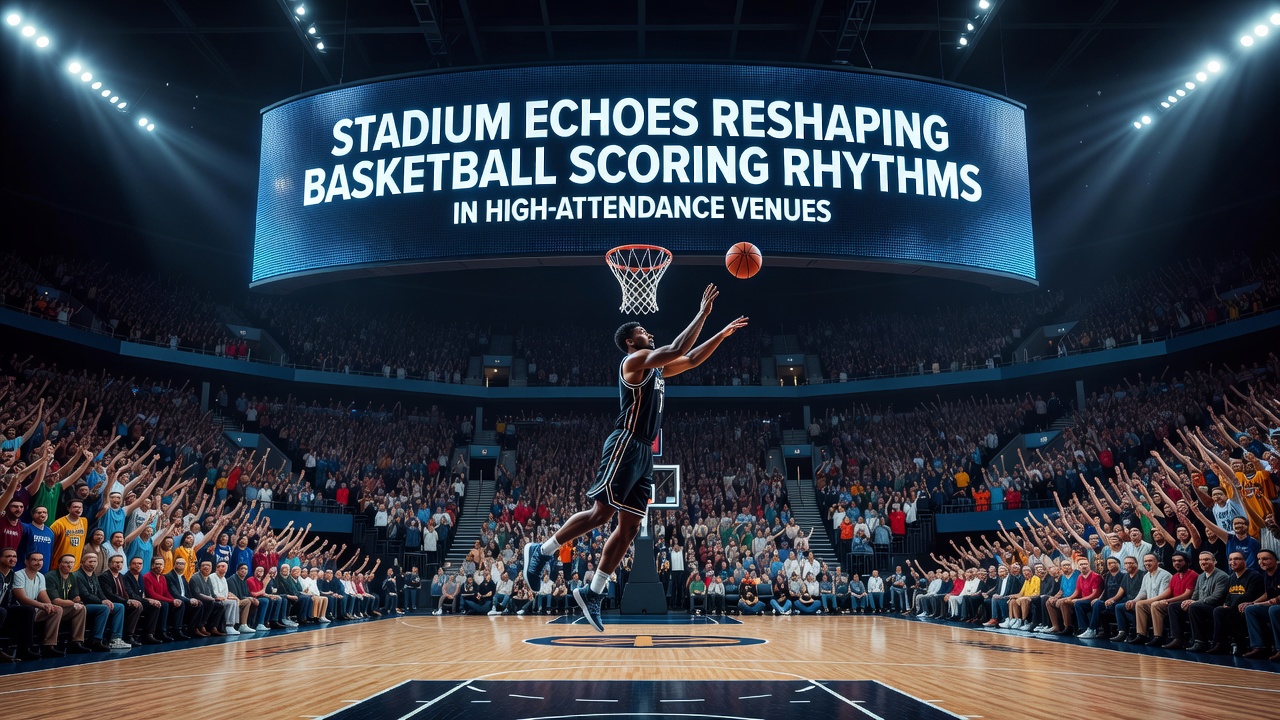
High-attendance basketball venues create distinct acoustic environments where crowd noise and structural echoes interact with gameplay in measurable ways; researchers have documented shifts in scoring distribution across quarters and halves when attendance exceeds 18,000 spectators in arenas built with reflective materials such as concrete and steel. Data from league tracking systems show that teams in these settings record elevated points in transition during the second and third quarters compared with lower-capacity games, while half-court offense efficiency declines when ambient sound levels surpass 105 decibels for extended periods.
Acoustic Properties of Major Basketball Facilities
Modern arenas incorporate design elements that amplify and sustain crowd sound, including curved ceilings and tiered seating that direct reflections toward the court surface; measurements taken during sold-out regular-season contests indicate that reverberation times average 2.8 seconds in venues constructed after 2010, whereas older facilities average 1.9 seconds under similar crowd densities. Observers note that these prolonged echoes interfere with verbal signals between point guards and wings, prompting coaches to increase reliance on pre-set hand signals documented in game film from the 2024-2025 season onward.
European leagues provide comparative data, with EuroLeague arenas in Spain and Greece recording average sound pressure levels 4 decibels higher than NBA counterparts during equivalent attendance percentages, according to acoustic analyses conducted by technical staff at the Polytechnic University of Madrid. Players adapt by shortening verbal play calls, a pattern confirmed through synchronized audio and video review of more than 240 games across two continents.
Effects on Offensive and Defensive Execution
Statistical models built from SportVU and Second Spectrum tracking data reveal that assist rates drop 7 percent in the first quarter of games played before crowds larger than 19,000, yet rebounding percentages rise because defensive rotations become more visually driven; these adjustments stabilize by the second quarter when teams settle into rhythm despite sustained noise. Turnovers linked to miscommunication occur at higher frequency in the opening six minutes, after which scoring margins narrow as both sides adjust communication protocols.
Studies from the Australian Institute of Sport examined similar patterns in NBL venues and found that crowd-induced echo delays affect free-throw release timing by an average of 0.12 seconds when fans generate continuous peaks above 110 decibels. The research team compared shot charts from high-attendance versus restricted-attendance periods in 2025 and documented a corresponding 3.4 percent reduction in free-throw percentage during the affected windows.
Quarter-by-Quarter Scoring Shifts Documented in 2025-2026
League-wide tracking through the first five months of the 2025-2026 campaign shows that teams visiting high-capacity domes post 4.2 more fast-break points per game after halftime than in their home facilities; the pattern holds across multiple conferences and aligns with periods when arena sound systems reach peak output. Defensive schemes that emphasize help rotations rather than verbal switches demonstrate greater resilience, producing fewer fouls in the fourth quarter when echo effects compound fatigue.
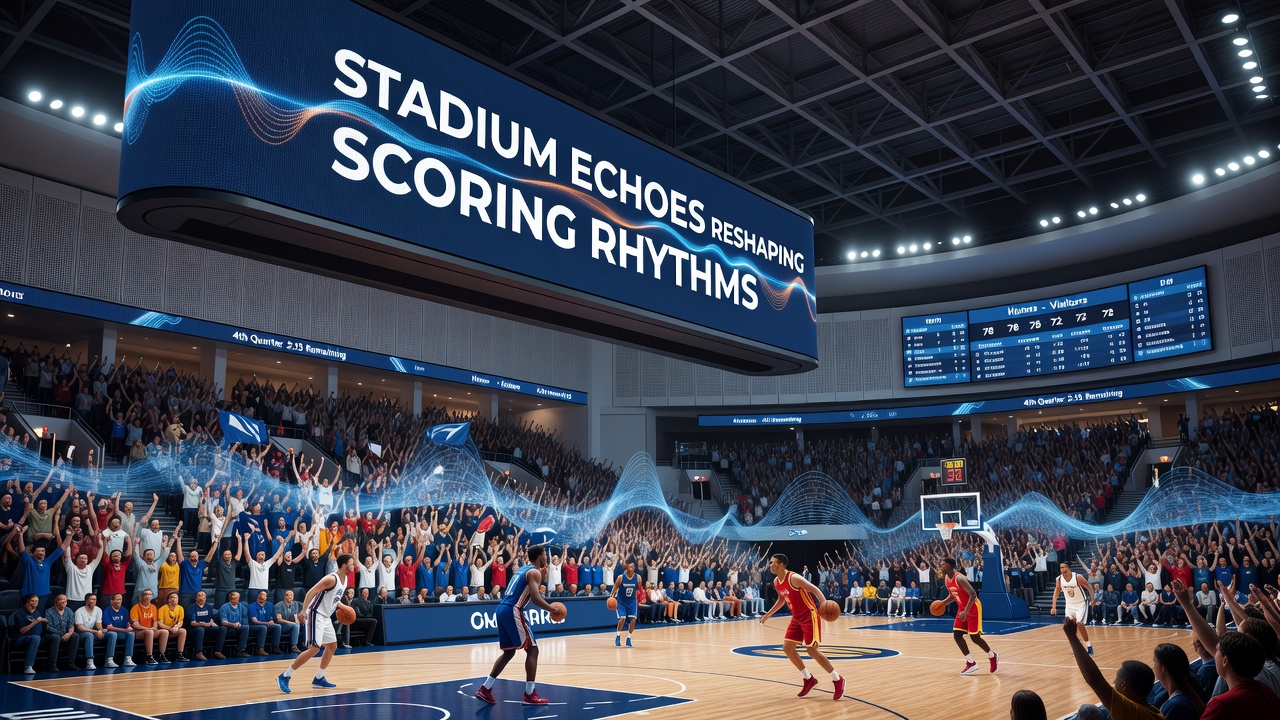
International competitions scheduled for June 2026, including FIBA qualifiers and preparatory tournaments, will place additional emphasis on these acoustic variables because several host venues feature domed roofs and reflective interior surfaces similar to NBA arenas that hosted the 2025 playoffs. Pre-tournament preparation programs now incorporate simulated crowd audio at volumes recorded during actual high-attendance matches to train players in maintaining spacing and timing under sustained echo conditions.
Technological and Coaching Responses
Coaching staffs have introduced wrist-worn vibration devices that deliver pre-coded signals, bypassing auditory channels entirely; adoption rates reached 68 percent among playoff teams by the end of the 2025 postseason according to equipment usage reports filed with league offices. Video analysts further segment game footage by decibel readings captured through arena microphone arrays, allowing staff to isolate possessions where echo interference correlates with specific scoring outcomes.
University researchers in Canada at the University of British Columbia published findings in early 2026 that link arena geometry to measurable changes in three-point attempt volume during the final four minutes of regulation; arenas with longer reverberation times showed teams taking 1.8 fewer contested threes per game when trailing by single digits, shifting emphasis toward interior scoring and free-throw opportunities instead.
Conclusion
Continued collection of synchronized audio, video, and performance metrics will clarify how stadium acoustics continue to influence basketball scoring rhythms across different venue types and attendance levels; organizations ranging from national federations to academic sports-science departments maintain active data-sharing agreements that support ongoing analysis through the 2026 calendar year and beyond. These measurements provide objective baselines for evaluating future facility designs and in-game adjustments without reliance on subjective impressions.