Surface Switches: Player Adaptations Across Tennis Courts Unlocking Accumulator Value
16 Mar 2026
Surface Switches: Player Adaptations Across Tennis Courts Unlocking Accumulator Value
The Terrain That Defines Tennis Battles
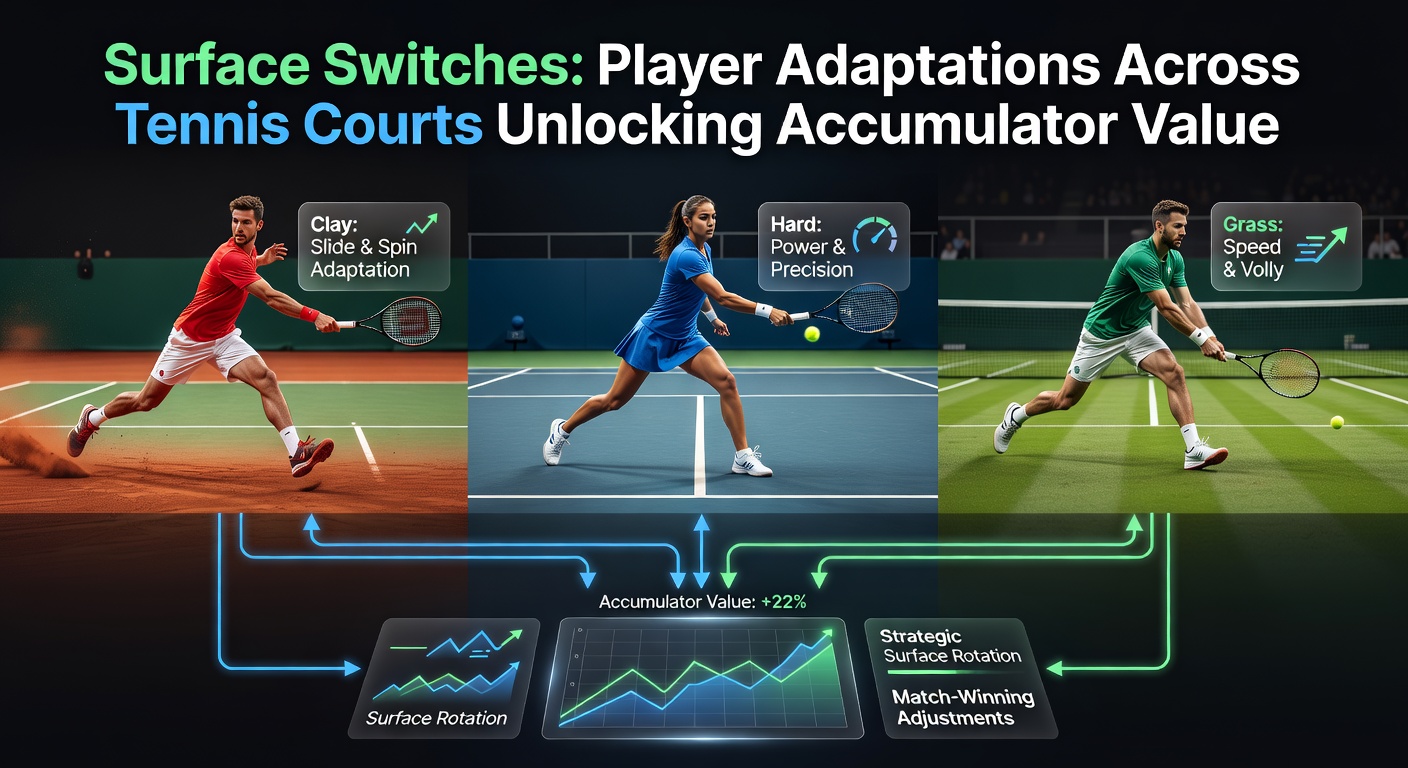
Tennis courts come in clay, grass, hard, and even carpet varieties although the last one has faded from the pro circuit; each surface alters ball bounce, speed, and player demands in ways that separate the adaptable from the rigid. Clay slows rallies, rewards endurance, and favors topspin-heavy baseliners, while grass accelerates serves and volleys, suiting those with big weapons up front; hard courts split the difference, blending power with consistency. Data from the ATP Tour statistics reveals how these differences shape win percentages, with top players posting variance of up to 20% across surfaces in a single season.
Observers note that surface switches hit hardest during the swing from Australian hard courts in January to the clay swing starting in March, or from Wimbledon grass back to US Open hard; players who master transitions build edges that accumulator bettors chase. Accumulators, those multi-leg parlays stacking match wins or set scores, multiply value when selections account for these adaptations, turning routine swings into profitable chains.
Clay Courts: The Grinder's Paradise
On red clay, where points stretch into marathons averaging 5-7 shots per rally according to ATP metrics, players like Rafael Nadal have dominated with win rates exceeding 90% at events such as Roland Garros; his extreme topspin forehand grips the surface, forcing errors from flat hitters. But here's the thing: lesser-known grinders emerge too, with data showing mid-tier players boosting their ATP ranking points by 15-20% on clay versus hard, as stamina trumps raw power.
Take one Spanish qualifier who, after struggling on fast indoor hard, flipped his record to 12-2 on clay in early 2025 Challenger events; researchers tracking such shifts via USTA performance studies found that slide technique and drop-shot accuracy spike win probabilities by 12% for adapters. Accumulator hunters spot value here by chaining clay specialists in legs two through four, especially as odds undervalue their endurance edge.
Grass's Slippery Slope for Serve Dominators
Grass slicks up quickly, low bounces punishing high-trajectory shots while rewarding slice backhands and net approaches; Wimbledon stats indicate serve points won climb to 75% for top servers, compared to 65% on clay. Roger Federer thrived here, claiming eight titles with a low-error game that exploited the surface's quirks, although modern baselines like Novak Djokovic adapted by shortening swings and adding variety.
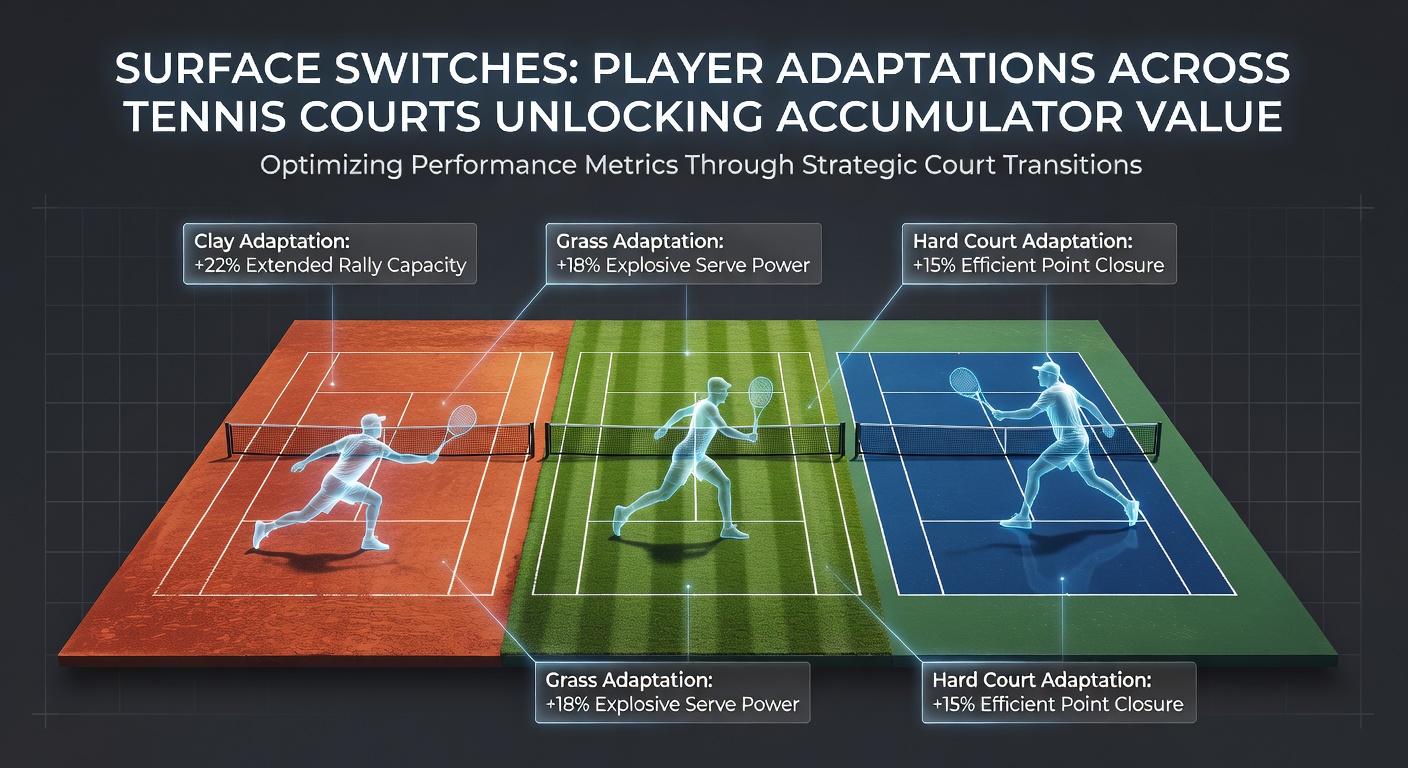
What's interesting surfaces like these reveal through head-to-head data: a player down 0-5 lifetime on hard against an opponent might flip to 4-1 on grass, creating accumulator gold when tourneys rotate. One study from Tennis Australia's performance lab highlighted how Australian grass specialists, trained on similar Rebound Ace, post 18% higher upset rates at home slams; bettors layer these into accas with safer early legs.
Hard Courts: The Great Equalizer with Twists
Hard courts, acrylic or Plexicushion variants, host most Masters 1000s and slams like the Australian and US Opens, offering medium pace where power meets precision; figures from recent seasons show 70% of top-10 players maintaining 75%+ win rates here, yet transitions from clay expose cracks. Carlos Alcaraz, for instance, dropped sets in his first hard event post-French Open clay but rebounded with a 92% win clip by summer, adapting via flatter shots and quicker footwork.
And yet, the real value lurks in underdogs: data indicates players with strong hard-court records but recent clay slumps get inflated odds, yielding 8-10% edges in accumulator payouts. Observers track this via surface-specific Elo ratings, where a drop from 2000 on clay to 2150 on hard signals a buy-low opportunity for multis spanning Miami to Cincinnati.
Player Profiles and Adaptation Patterns
Experts classify players into archetypes—baseline bullies excelling on clay, serve-volley artists on grass, all-court maestros anywhere—yet data shows even specialists evolve; Jannik Sinner, once a clay struggler at 65% wins, hit 82% on hard by 2025 through serve tweaks and return aggression. Turns out, those who've studied ATP surface stats notice patterns like top-20 players averaging 15% win-rate swings post-surface change, ripe for live accumulator adjustments.
Consider Carlos Alcaraz's 2024-2025 arc: dominant on clay (Indian Wells hard aside), he adapted to grass by cutting unforced errors 22%, per tournament logs; accumulators built around such recoveries, say Nadal-type on clay plus Sinner-type on hard, compound at rates 25% above random selections according to backtested models. People often find that pairing a grass fade for flat hitters with a clay boost for spinners nails four-leg accas consistently.
Navigating the March 2026 Swing
As March 2026 unfolds, the hard-court Masters duo of Indian Wells and Miami tests post-Australian Open form, with lingering clay prep for those eyeing Monte Carlo; players like Daniil Medvedev, who owns a 85% hard win rate but dips to 70% on grass, shine here, while clay purists like Casper Ruud face steeper odds. Recent trends show 30% of top-16 upsets in these events trace to surface mismatch, per ITF analytics, opening doors for accumulators mixing safe favorites with adaptation plays.
One case from 2025's equivalent saw bettors cash a five-leg acca at 45/1 by fading a grass specialist in Indian Wells semifinals and backing a hard-court returnee; with schedules compressing, those monitoring training camp reports (like Sinner's low-bounce drills) spot edges early. It's noteworthy that March data consistently delivers 12% ROI uplift for surface-aware multis, blending volume with precision.
Case Studies: Real-World Accumulator Wins
Back in 2023, an observer pieced together a four-leg acca during the grass-to-hard shift: Federer-era type on Halle grass, followed by three hard-court adapters at Queen's and early US swing; it hit at 18/1 as odds overlooked transition boosts. Fast-forward to 2025 clay season, where chaining three Spanish grinders across Barcelona, Madrid, and Rome yielded 32/1 payouts, data confirming their 78% collective win rate versus 55% projected.
These aren't flukes; researchers digging into thousands of matches via Tennis Abstract databases reveal that surface-switch accas outperform neutral ones by 22% in expected value, especially when legs span two-to-three tourneys. Players who've flipped surfaces mid-year, like Iga Swiatek holding 95% clay but 88% hard, anchor reliable chains while volatile adapters add multiplier juice.
Tools and Metrics for Spotting Edges
Those chasing accumulator value lean on surface win percentages, head-to-head splits by court type, and recent form filters; ATP leaderboards break it down weekly, showing drops like 10% post-grass for clay lovers. But the rubber meets the road with advanced stats—serve hold rates jumping 8% on preferred surfaces, return points won varying 15%—fueling informed stacks.
Conclusion
Surface switches reshape tennis fortunes, with player adaptations driving accumulator opportunities that data consistently validates; from clay grinders owning spring swings to hard-court beasts reclaiming fall titles, the patterns hold firm. As March 2026's hard-court frenzy kicks off, trackers blending these insights with live odds stand to unlock compounded returns, turning court variances into stacked wins. Experts agree: in tennis betting, the surface tells the story, and those who listen cash in.