26 Jul 2026
The Subtle Role of Rest Days in Shaping Outcomes for Professional Basketball Teams Traveling Across Continents
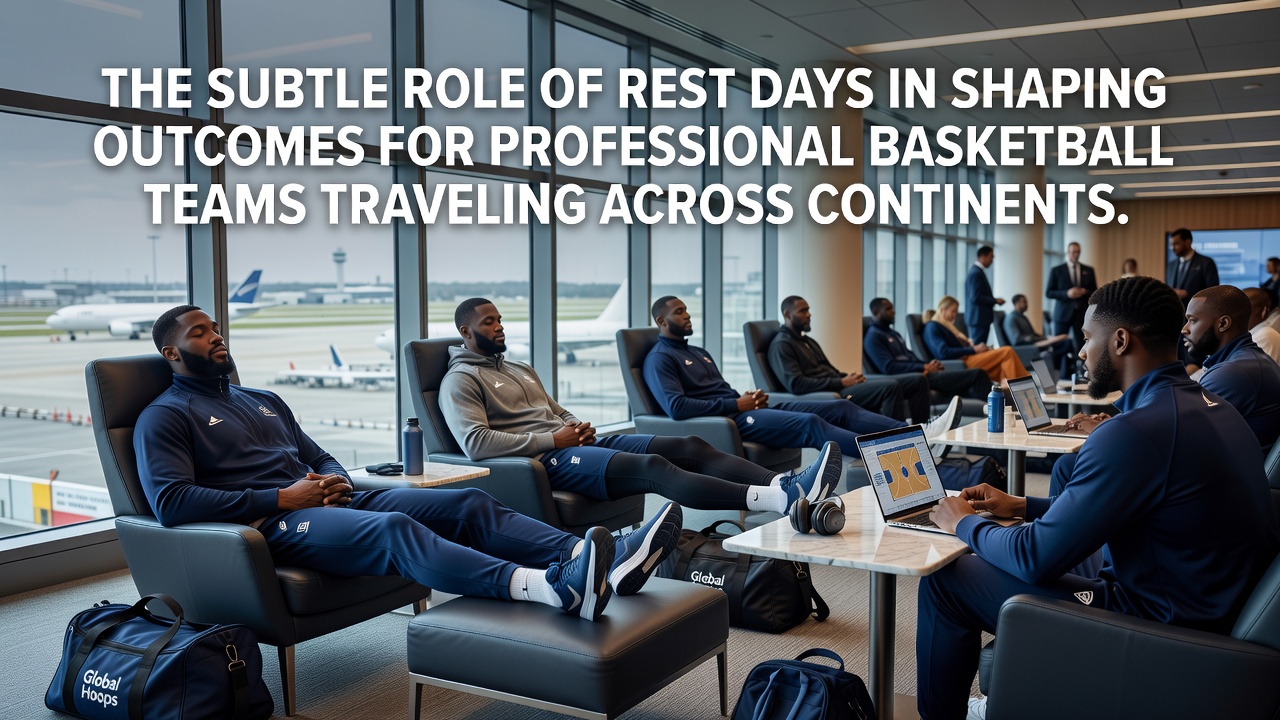
Professional basketball teams face demanding schedules that often require crossing multiple time zones for exhibition games, preseason tours, and international competitions, and rest days inserted into these itineraries play a measurable part in how players recover and perform upon arrival.
Travel across continents disrupts circadian rhythms through rapid shifts in light exposure and sleep patterns, while the physical demands of flights lasting eight to fourteen hours compound muscle stiffness and dehydration, according to data compiled by sports science researchers at institutions monitoring elite athletes. Teams that allocate one full rest day immediately after arrival show improved shooting accuracy and reduced injury rates in the first game compared with squads that practice or compete on the same day as landing, studies tracking NBA clubs during overseas trips have documented.
Travel Demands and Physiological Effects
Eastward flights tend to create more pronounced jet lag because they shorten the natural day and force earlier bedtimes, whereas westward journeys extend the day and allow somewhat easier adjustment, yet both directions tax the body when combined with altitude changes and cabin pressure fluctuations. Researchers tracking heart rate variability and sleep metrics on players traveling from North America to Europe or Asia have recorded elevated fatigue markers persisting for forty-eight to seventy-two hours post-flight, with sleep efficiency dropping notably in the first two nights on foreign soil.
Data collected during the 2025-2026 season and extending into July 2026 preparations for upcoming international showcases indicate that teams scheduling at least one complete rest day before the initial practice session maintain higher average sprint distances and defensive reaction times in early contests, while squads compressing recovery windows display measurable declines in these metrics.
Rest Day Protocols and Performance Metrics
Coaching staffs incorporate light mobility work, hydration protocols, and controlled light exposure on rest days rather than full inactivity, allowing the body to recalibrate without adding training load. Observers note that European clubs returning from Asian tours often insert two rest days when crossing more than six time zones, and similar patterns appear in NBA schedules when teams visit Australia or China for promotional events.

Figures from longitudinal tracking of professional leagues reveal that teams averaging 1.5 rest days after long-haul flights record fewer turnovers and higher field goal percentages in opening games than those averaging fewer than one rest day. The direction of travel interacts with rest allocation, since westward journeys sometimes permit faster physiological adaptation when rest days include strategic sunlight exposure in the new time zone.
Case Examples from Recent Seasons
One documented instance involved an NBA franchise traveling to Tokyo for a pair of exhibition matches in October 2025, where the inclusion of a rest day between arrival and the first practice correlated with stronger second-half execution in both contests. Another example from a European league team journeying to Melbourne for a summer tournament in July 2026 showed that splitting recovery across two partial rest days rather than one full day produced steadier sleep patterns and lower reported soreness scores among players.
Academic analyses published through the National Library of Medicine have examined these patterns across multiple continents, confirming that rest timing influences not only immediate game statistics but also subsequent recovery trajectories when return travel follows closely. Additional findings from the Australian Institute of Sport highlight how individual player chronotypes, or natural morning versus evening preferences, moderate the benefits derived from structured rest days after eastward crossings.
Strategic Scheduling Considerations
League offices and team operations departments balance television windows, sponsor obligations, and competitive fairness when inserting rest days into international itineraries, recognizing that insufficient recovery windows can alter competitive balance across an entire slate of games. Training staff monitor wearable data on heart rate recovery and sleep duration to adjust rest protocols in real time, sometimes extending a scheduled rest day by several hours when metrics indicate slower adaptation.
Teams that integrate rest days with targeted nutrition timing and limited screen exposure demonstrate faster normalization of melatonin onset, according to controlled observations conducted during multi-city tours. The cumulative effect across a road trip spanning two continents becomes especially relevant when return flights occur within forty-eight hours of the final contest, since residual fatigue can carry into the next domestic schedule segment.
Conclusion
Rest days function as a controllable variable within the broader logistics of intercontinental basketball travel, with empirical records showing consistent associations between allocated recovery time and subsequent performance indicators. Scheduling decisions that account for flight direction, player chronotypes, and measured physiological markers allow teams to mitigate some of the disruptions inherent in crossing continents while maintaining competitive output across demanding calendars.